
Studying abroad is a dream for many students, but achieving it requires careful planning, preparation, and understanding of international admission requirements. One of the most crucial aspects of this journey is demonstrating English language proficiency. The IELTS Guide by Eduvertex is designed to provide students with a comprehensive understanding of the IELTS exam, helping them navigate the process with confidence. From understanding the test structure to achieving the desired band scores and avoiding common mistakes, this guide equips students with all the knowledge they need to succeed.
IELTS, or the International English Language Testing System, is more than just a test of grammar and vocabulary. It evaluates your ability to communicate effectively in academic, social, and professional situations. Scoring well in IELTS not only increases your chances of getting admission into top universities but also strengthens your visa applications, scholarship opportunities, and overall readiness for studying in an English-speaking country. This guide is ideal for students who want to understand every detail about IELTS and make informed decisions about their study abroad plans.
What Is IELTS and Why It Matters for Study Abroad
IELTS is one of the most widely accepted English language proficiency tests across the globe. Universities, colleges, professional organisations, and immigration authorities recognise IELTS scores as a reliable measure of your English skills. Unlike other exams, IELTS is designed to reflect real-life situations. Whether it is understanding academic lectures, reading scholarly articles, writing reports, or expressing opinions in discussions, IELTS ensures that students are prepared for life in an international academic environment.
By taking IELTS, students demonstrate not just their ability to use English but also their readiness to adapt to a new culture, communicate with peers, and excel in their studies. A high band score opens doors to top universities and gives students confidence in handling day-to-day communication while studying abroad.
IELTS Exam Format Explained Clearly
The IELTS exam evaluates four critical skills: Listening, Reading, Writing, and Speaking. Each section is carefully structured to simulate real-life scenarios, ensuring that students are assessed on practical English usage.
- Listening: The Listening section includes conversations, monologues, and lectures. Students must identify key information, understand opinions, and capture details accurately. With 40 questions and a duration of 30 minutes (plus 10 minutes for transferring answers in paper-based tests), this section tests focus, accuracy, and time management.
- Reading: This section assesses comprehension skills using texts from books, journals, magazines, and newspapers. Students need to interpret information, analyse arguments, and answer 40 questions within 60 minutes. Understanding question types and practising speed reading are essential for success.
- Writing: The Writing section evaluates your ability to present ideas clearly and coherently. Academic IELTS requires describing visual data in Task 1 and writing essays in Task 2, while General Training focuses on letters and short essays. Students are assessed on organisation, vocabulary, grammar, and task response.
- Speaking: The Speaking test is a face-to-face interview divided into three parts: Introduction and Interview, Cue Card, and Discussion. It measures fluency, pronunciation, vocabulary, and the ability to organise thoughts logically. Speaking performance significantly impacts the overall band score, making practice and confidence vital.
Understanding IELTS Band Scores
IELTS scores range from Band 0 to Band 9. Each module receives an individual band score, and the overall band is the average of these four scores. Understanding band scores helps students set realistic goals and prepare accordingly.
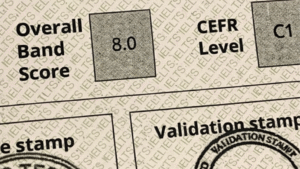
- Band 8.0 – 9.0: Expert to very good user; ideal for top-tier universities and competitive programs.
- Band 7.0 – 7.5: Good user; widely accepted by leading institutions globally.
- Band 6.5 – 7.0: Competent user; suitable for many undergraduate and postgraduate courses.
- Band 6.0 – 6.5: Moderate user; accepted by several colleges and foundation programs.
- Below Band 6.0: Limited acceptance; may require additional language preparation or pathway courses.
Students should check specific band requirements for their chosen courses, as minimum scores can vary depending on the country, university, and program type.
IELTS Listening: Common Mistakes to Avoid
Listening is often considered the easiest module, yet students frequently lose marks due to small mistakes. Common errors include:
- Predicting answers before the recording ends
- Ignoring specific instructions or word limits
- Missing distractors, such as changes in dates or details
- Leaving answers blank
- Incorrect spelling or grammar
To improve performance, students should practise listening to various English accents, take full-length mock tests, and review mistakes carefully. Time management and focused attention are key to achieving a higher listening band score.
Building Strong Vocabulary for IELTS Speaking
A strong vocabulary allows students to articulate ideas naturally and accurately during the Speaking test. Instead of relying on repetitive word lists, students should focus on:
- Contextual learning: Learn new words and phrases through podcasts, interviews, and English media.
- Topic-based word banks: Create vocabulary lists around common IELTS topics such as technology, education, or environment.
- Practice through discussion: Use new words in daily conversations to improve retention.
These techniques help students communicate ideas effectively, expand their lexical range, and perform confidently in the Speaking test.
How to Send IELTS Scores to Universities
IELTS results are released approximately 13 days after the test. Students can send their Test Report Form (TRF) to universities either electronically or through paper delivery. Up to five institutions can receive scores free of charge within one month of the test date. Early planning ensures that scores reach universities before deadlines, avoiding unnecessary stress.
IELTS Guidance and Student Support in Kollam
For aspirants in Kollam, expert guidance can make a significant difference. Eduvertex, recognised as the Best Ielts Coaching Centre in Kollam, provides structured support to help students understand exam requirements, improve their band scores, and navigate admission processes efficiently. Personalized strategies, mock tests, and focused training help students gain the confidence needed to excel in IELTS.
IELTS Expertise and Student Success in Trivandrum
Students in Trivandrum also benefit from specialised guidance for international education. Known as the Best Ielts Coaching Centre in Trivandrum, Eduvertex focuses on helping students achieve their target band scores through strategic preparation. By following exam-focused training, students gain clarity on all IELTS modules, improving accuracy and overall performance.
Students can also stay updated with IELTS tips, guidance, and global education information by following Eduvertex on Instagram and Facebook, where valuable resources and updates are shared regularly.
Conclusion
This IELTS Guide emphasises that success is not just about studying hard—it is about understanding the exam, improving communication skills, avoiding common mistakes, and using scores strategically for admissions. With proper guidance from Eduvertex, students can confidently prepare for IELTS, achieve their target band scores, and take the first step toward their study abroad dreams.